
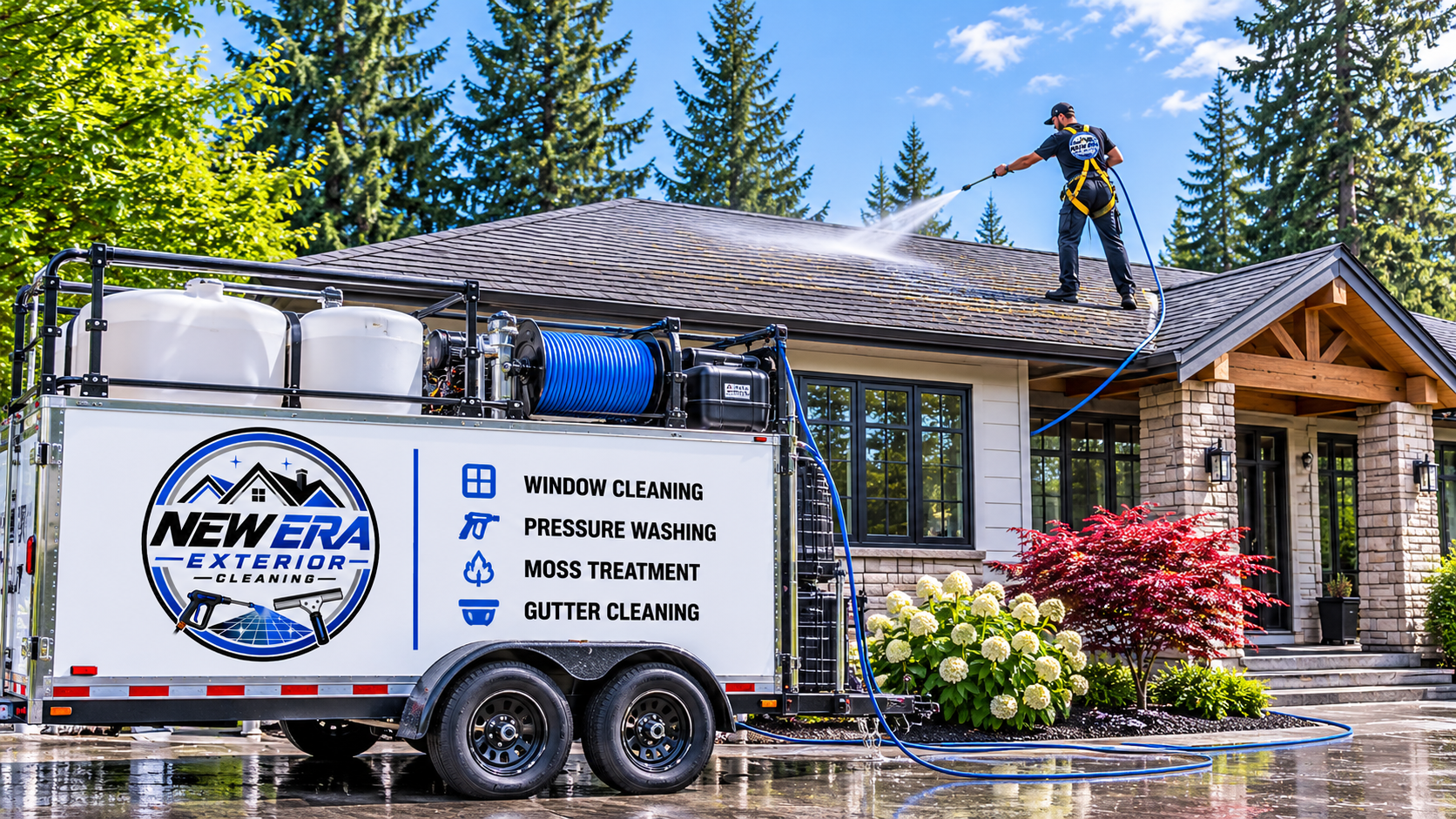
Sodium Hypochlorite Treatment
Sodium hypochlorite is a powerful oxidizing agent widely used in professional exterior cleaning. It works by attacking organic growth at its cellular level, making it an effective option for treating established moss and other biological buildup. Its ability to work relatively quickly makes it a valuable treatment method when the roof material and conditions are suitable. Proper dilution, application, and protection of surrounding landscaping are essential.
Why Understanding the Difference Matters
Choosing between these treatments isn't about picking the strongest chemical. It's about understanding the roof, identifying the type and extent of growth, and selecting the appropriate treatment for the conditions.
Our team understands that the wrong chemical, incorrect concentration, or improper application can create unnecessary risks to roofing materials, landscaping, and surrounding property. That's why training, product knowledge, and careful application are at the center of our process.
We take the time to understand what we're treating before deciding how to treat it. Our goal is not simply to make moss disappear overnight, but to provide responsible, effective treatment that helps protect the life and appearance of your roof.
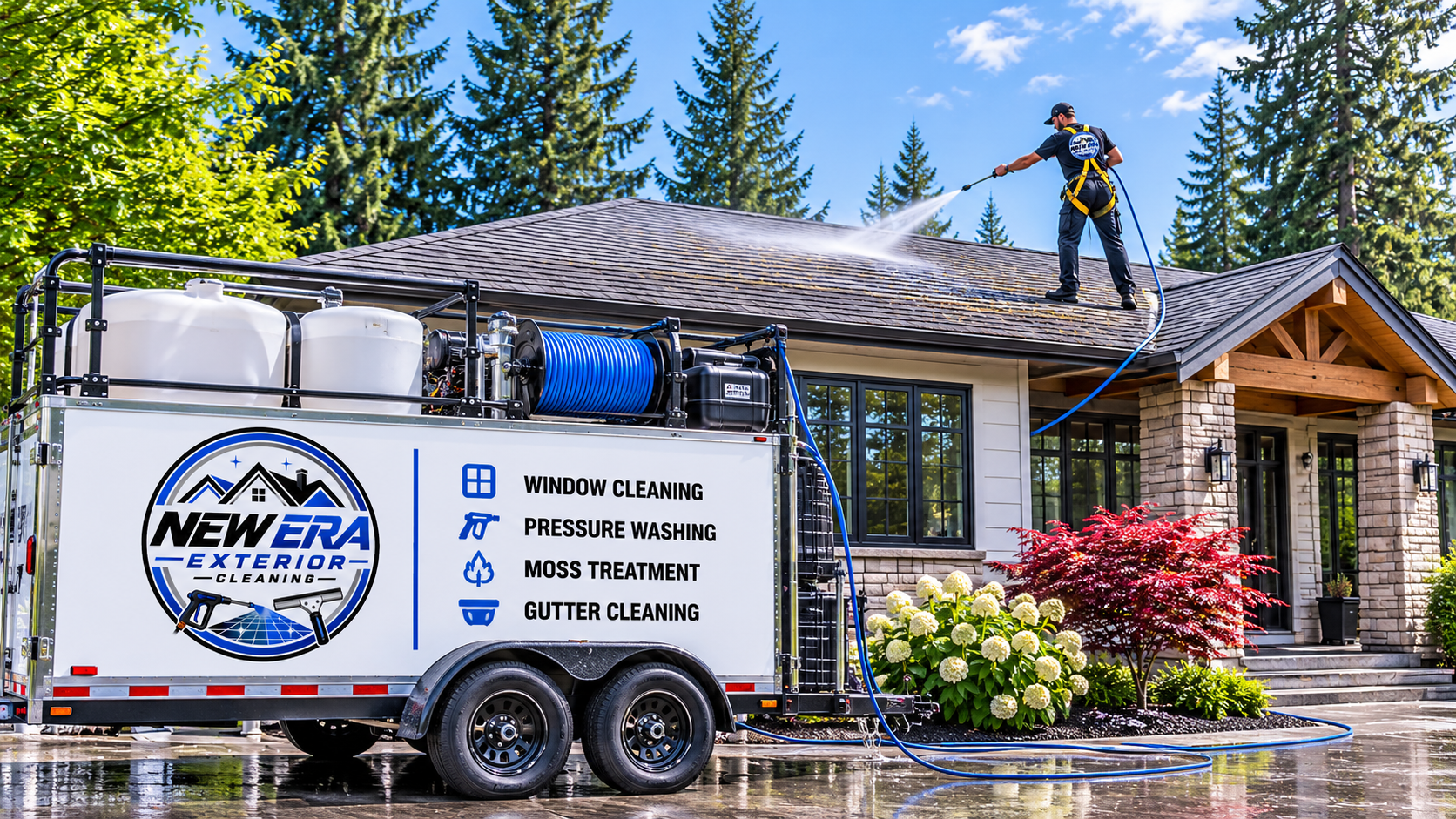
We believe proper moss removal starts with understanding what we're treating. Moss isn't simply something you wash away. It's a living organism that requires the right treatment, the right chemistry, and the right approach to achieve lasting results while protecting your property.
With hundreds of different moss species, no two situations are exactly alike. Different moss varieties, roof materials, growth conditions, and levels of buildup can require different treatment methods. Knowing which approach to use is just as important as knowing how to apply it.
That's why we understand and utilize two primary treatment approaches:
Hydrogen Peroxide Treatment
Hydrogen peroxide is an oxygen-based cleaning agent that works through oxidation to break down organic growth. One of its advantages is that it breaks down into water and oxygen, leaving no chlorine-based residue. When properly selected and applied, it can be an excellent option for certain moss treatment situations where a non-chlorine approach is preferred.